Nicolás
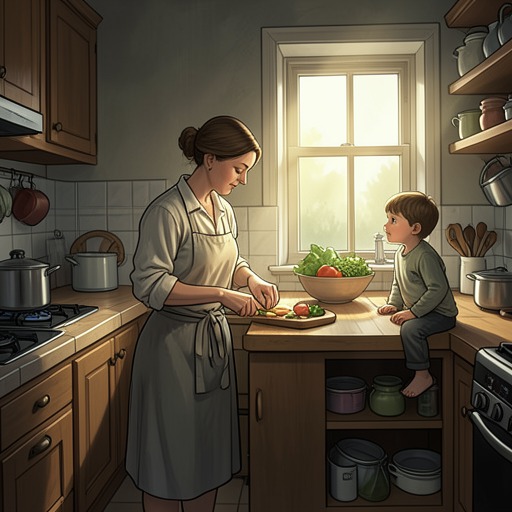
También esto pasaráNicolás, usually called Nico, is Blanca’s younger son, whose brief appearances combine a child’s unembarrassed certainty with the lively demands of family life. He is not given a separate plot of his own; instead, his imaginings and gestures help show how Blanca’s children inhabit grief and how physical closeness can steady their mother amid the bustle of travelling together.
Identity and Place in the Family
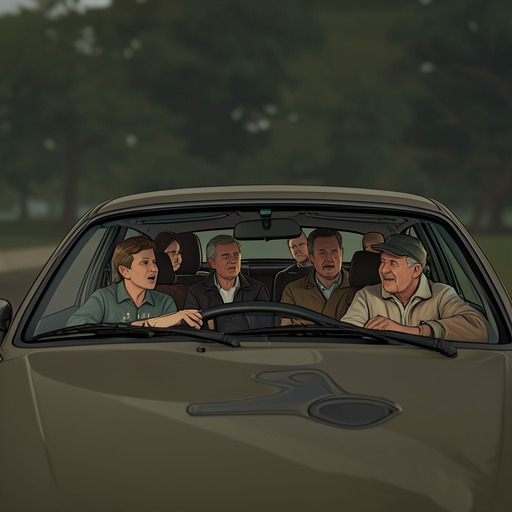
Nicolás is the younger of Blanca’s two boys. He is five in the recollection of his belief about Blanca’s mother, and Blanca identifies him as the younger child when he tells her that he and his brother have eaten well. The scenes place him within a broader, sometimes improvised family circle: he travels with his brother Edgar, Sofía’s son Daniel, and their caregiver Úrsula, while Guillem, the father of Blanca’s eldest son, is also part of the children’s life. On the journey to Cadaqués, Blanca drives and Sofía rides beside her; the children occupy the back seat. Nicolás therefore appears in a family organized across households and adults, rather than in an isolated parent-and-child setting.
The book gives him no extended biography, and his character emerges through what he says and does in company. He can answer his mother plainly, turn a practical dispute into a declaration of principle, and join the other children in play. These small scenes keep him distinct without making him more knowing or more solemn than a child: his imagination can accommodate death, while his immediate concerns still include food, a costume, and the rules of a car journey.
A Child’s Picture of the Dead
Nicolás tells Blanca that her mother is in heaven playing poker with Copito de Nieve. The image is strikingly specific and delivered with such conviction that Blanca, despite being forty and having known her mother far longer, sometimes finds herself doubting her own uncertainty. The scene does not present his account as confirmed fact. Its force lies instead in the difference between the child’s confident picture and the bereaved adult’s inability to imagine a better place for the dead.
Blanca connects this imaginative access to the children’s relationship with their grandmother during her illness. Looking back, she wonders whether the children were the only ones who could reach the person her mother had been through illness and mental fog. They did not hate her, she reflects, and were able to make her seem to resurface. In their drawings, the dead woman appears flying above the family, part mischievous witch and part clumsy fairy. The passage associates Nicolás’s poker-playing vision with the children’s wider effort to picture their grandmother as present in another form: neither a clinical account of her illness nor an adult explanation of death, but a playful image that keeps her imaginable.
Mischief and Everyday Authority
On the trip toward Cadaqués, Nicolás helps set the comic tone of family life. When Blanca asks whether the children have been spared frozen pizza and the supposedly toxic instant noodles she says she feeds them, the boys shake their heads; Nicolás assures her they have eaten wonderfully at Guillem’s. Guillem then jokes that the noodles have been banned and that Blanca will have to buy them on the black market. Nicolás’s brief answer gives the exchange its child-sized reassurance, while the adults’ teasing makes food part of their familiar family banter.
He is also attached to the elaborate demands of the Cadaqués holiday. During an earlier shower, Blanca recalls, he and Úrsula came into the bathroom to ask where the Mandarin costume was; in his view, taking it to Cadaqués was essential, since going without it would make the trip pointless. When Blanca tells them to leave because she is naked, Nicolás objects, and Úrsula laughs. His insistence on the costume and his protest at being sent away show him asserting his own priorities inside the adults’ arrangements. The humor depends on the mismatch between the grand importance he gives the outfit and the ordinary limits his mother is trying to enforce.
The Journey and Physical Closeness
The drive to Cadaqués makes Blanca’s sense of adult responsibility visible. She is the one deciding when to leave, directing Úrsula, choosing the children’s clothes, and driving, yet she feels like a fraud who might be sent back to the children’s seat. Nicolás is one of the children she watches through the rear-view mirror, laughing and quarrelling with the others. The scene places his ordinary presence within Blanca’s contrast between the outward tasks of adulthood and her inward feeling that she has not quite left childhood behind.
Later, on the boat, Nicolás’s small, warm hand rests in Blanca’s. Around them, the children take turns at the helm under Guillem’s guidance; Edgar sits astride the prow, while Sofía closes her eyes and Patum dozes at Blanca’s feet. When they reach a cove and the engine falls silent, the group emerges from its quiet reverie and the children prepare to swim. Nicolás’s hand is a modest but concrete point of contact in a passage otherwise shaped by movement, open water, and shared stillness. Alongside his extravagant image of Blanca’s mother in heaven, the gesture presents another way the child figures in Blanca’s world: close at hand, part of the living family moving together.